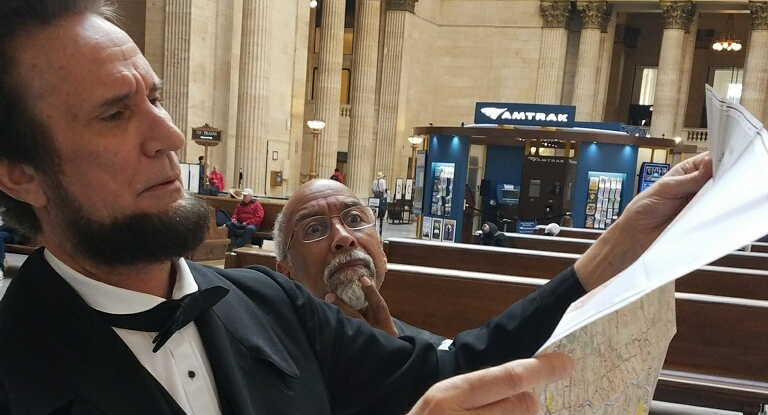
Happy President’s Day.
I’m taking the holiday to reflect on one of my favorite topics and travel joys: Presidential politics and Black History.
They do mix.
President’s Day is to honor two stalwart presidents born in February. George Washington and Abraham Lincoln, each of whom left an imprint on African American history.
The first president left his name to cities, currency, schools and American offspring for generations. It seems there are new bits of history about Mr. Washington discovered each year to replace the ones that filled my fourth grade history books. You know, like the tales of his wooden teeth, and about not lying about chopping down cherry trees. I prefer the story of how the president lent his name to the act of slicing turkeys each Thanksgiving when he became George Washington carver.
(More stories later about the actual George Washington Carver, who was among my grandmother’s college teachers at Tuskegee Institute.)
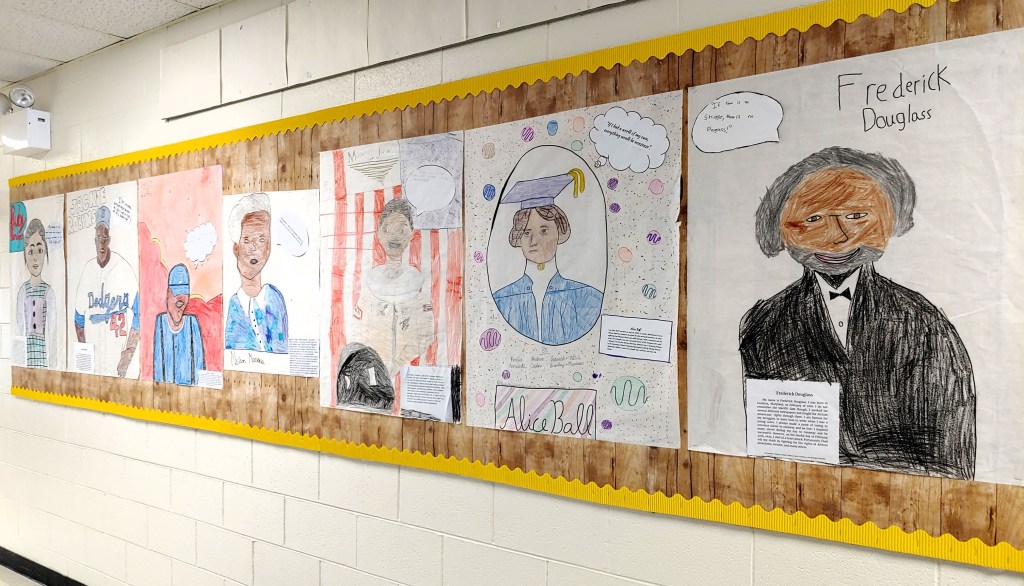
Mr. Lincoln, meanwhile, provided framework for studying Black History when the Father of Black History, Carter G. Woodson, chose his February 12 birthday and the February 14 birthday of Frederick Douglass to anchor Negro History Week in 1926.
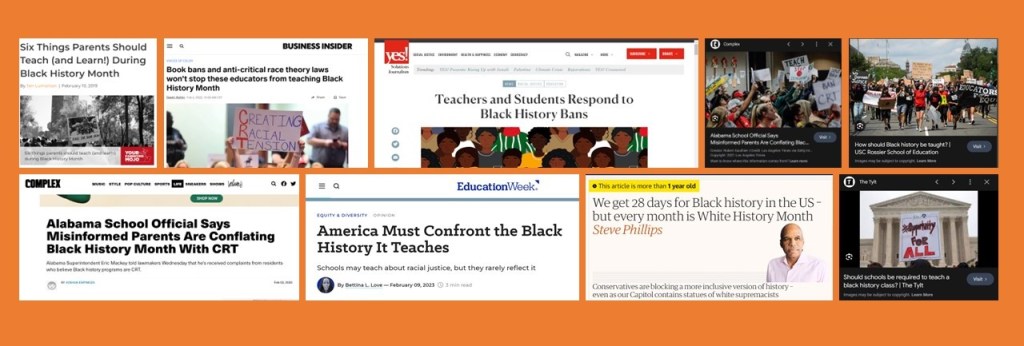
A century later, as we know, the idea of studying Black History is debated by legislators, state chief executives and the 47th President of the United States.
READ MORE: Federal Agencies Bar Black History Month
READ MORE: Trump’s Anti-DEI Order Stops Maryland National Guard from Celebrating Frederick Douglass’ Birthday
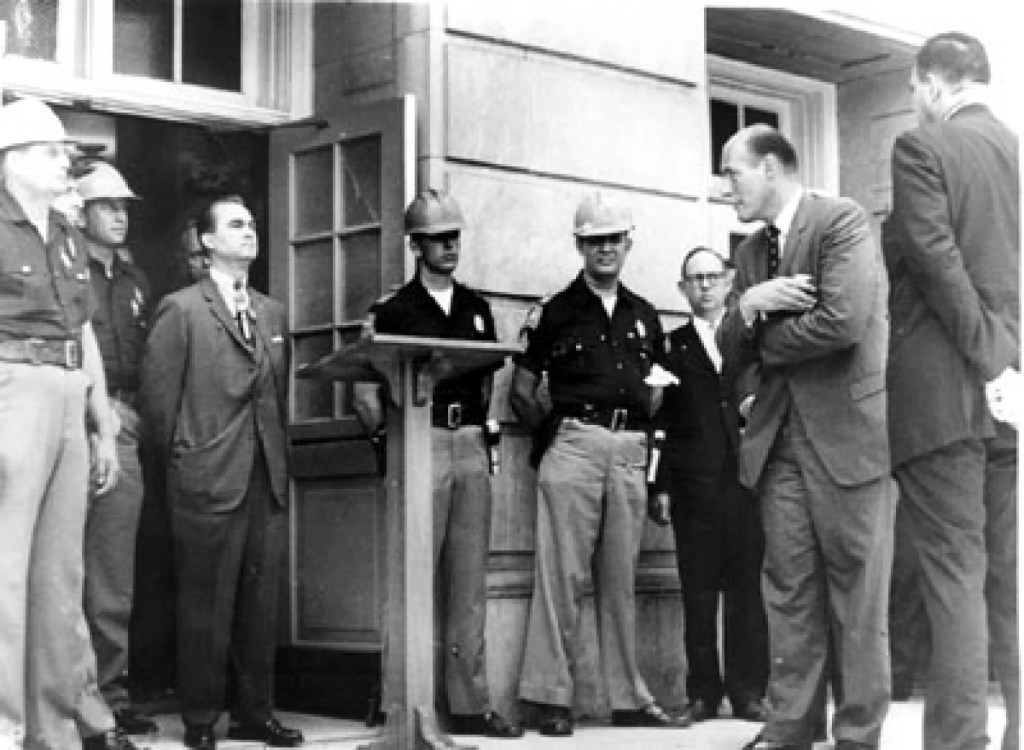
Their political grandstanding seems a virtual version of when Southern governors stood in doorways to block ONE black student from walking into the building. These governors (can you say “Arkansas, Alabama, Mississippi?”) defied presidential orders and court mandates to integrate the schools, usually only after backing down in the face of federal military intervention which was seen around the country (like in our Indiana home, available to be seen only on three television network news channels before dinner).
In contrast, it seems several times a day, stories appear in my newsfeed (to be verified) about reactionary overreach by school boards or teachers.
(Illustration, this head-shaker that arrived during Negro History Week: a report that a Florida teacher was sending home permission slips to even READ about a book Black History. This concept is completely contrary to Woodson’s goal — that Black History be integrated as a regular part of American history curriculum.) 1
READ MORE: “All the Ways Ron DeSantis is Trying to Rewrite Black History.” — Washington Post
READ MORE: “How (and Why) Florida and Texas Governors Are Erasing Black History from Schools” — Chicago Education Advocacy Cooperative
Under such circumstances, then, what better place to explore Black History than by examining the role of U.S. Presidents in the development of African-America?
(Please note when I distinguish between “African-American” and “Black” History. In this corner, Black History encompasses the entire Earth. African-America is the unique culture established by the United States. You don’t find African-Americans as citizens of Toronto, for example. Black residents of that city are called Canadians.)
From the nation’s beginning, American presidents have played formidable roles in shaping the legal access, educational opportunities and global perceptions of Black residents of the United States. Momentarily setting aside implications from the fact that 10 of the first 12 presidents owned at least one slave, the next few posts will share information and comments on 10 commanders-in-chief who had direct or passive roles recorded (or bypassed) in Black History books.
The 10 are (with tongue-in-cheek subtitles):
- Abraham Lincoln, The Eventual Emancipator
- Woodrow Wilson, Confederate Revisionist
- Warren G. Harding, Somebody’s Baby
- Franklin Delano Roosevelt, The Occasional Reformer
- Harry Truman, Give Segregation Hell
- Dwight Eisenhower, Domestic School General
- John F. Kennedy, Legacy from Tragedy
- Lyndon Johnson, The Democratic Betrayer
- Bill Clinton, Who’s the Brother?
- Barack Obama, The Nation’s Subconscious
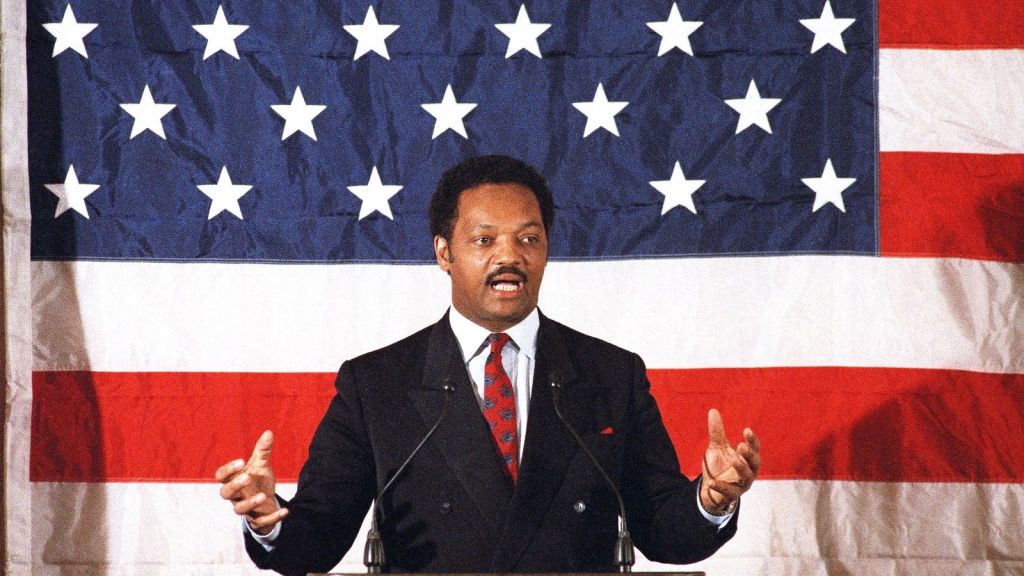
For fun and good measure, I’ll also give insight into U.S. governors whose impact on Black History emanated from a desire to run for the White House…as well as state’s rights to maintain the status quo, or turn back the clock by leveraging an us-against-them scenario that seems remarkably contemporary.
Along the way will be references to other Chief Executives whose personalities or policies dabbled in Black History, including the individual who succeeded Obama, and shall remain nameless until necessary.
 Black History: A Personal Journey
Leave a comment